
Lab Alliance distills complex analytical techniques into practical, validated workflows that prioritize reproducibility and audit defensibility. Their experts align mass spectrometry, chromatography, and spectroscopy protocols with rigorous QA/QC, calibration, and signal-processing steps laballiance. Sample preparation and cleanroom practices minimize contamination while systematic troubleshooting and control charts maintain instrument performance. Validation plans define LOD/LOQ, precision, and recovery thresholds with documented change control. Practical case studies show governance-driven improvements and next sections outline actionable implementation guidance.
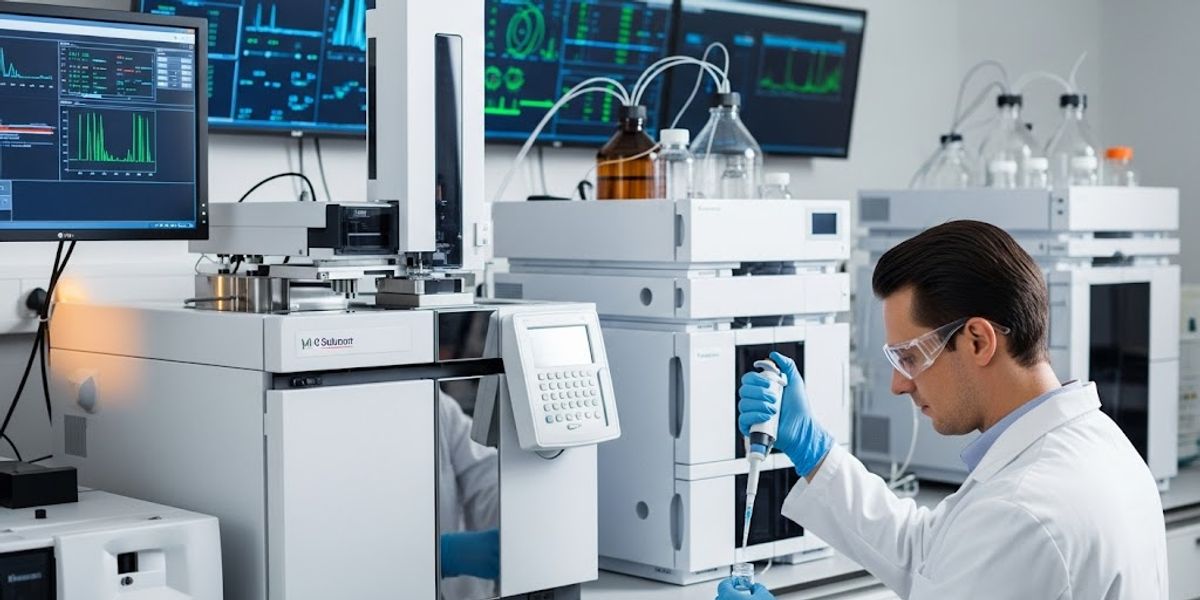
Mass Spectrometry: Principles and Practical Workflows
Mass spectrometry combines ionization, mass analysis, and detection to convert chemical information into precise mass-to-charge measurements that reveal molecular identity and structure. The laboratory adopts targeted workflows: sample preparation, selection of ionization techniques, calibrated mass analyzers, and controlled detection parameters. Practitioners prioritize reproducibility, maintain instrument diagnostics, and enforce QA/QC checkpoints. Data interpretation follows standardized algorithms, spectral matching, and statistical validation to support decisive conclusions. Methods emphasize throughput without compromising sensitivity. Protocols define decision thresholds, reporting formats, and archival procedures to guarantee traceability. The approach empowers teams to manage analytical risk and deliver actionable https://laballiance.com.my/, defensible results.
Chromatography Techniques: Choosing the Right Mode
Chromatographic method selection hinges on matching separation mode to analyte properties and sample complexity, balancing resolution against throughput. Stationary phase choice governs selectivity through chemistry and morphology, dictating retention mechanisms and susceptibility to matrix effects. Mobile phase strategies—pH, solvent strength, additives—are optimized to modulate retention, peak shape, and compatibility with detection.
Selecting Separation Modes
When confronted with a complex mixture, the selection of a separation mode hinges on the physicochemical properties of analytes, matrix constraints, and analytical goals. The expert recommends matching technique to objective: sensitivity and speed favor ion mobility for gas-phase conformers, while charge-driven resolution favors capillary electrophoresis for ionic species. Consider throughput, compatibility with detectors, and sample cleanup burden. Decision trees prioritize orthogonality and reproducibility. Implement method scouting with targeted experiments, quantitative metrics, and risk controls to retain command over outcomes.
| Criterion | Impact |
|---|---|
| Throughput | Instrument/time demand |
| Compatibility | Detector/sample matrix |
Stationary Phase Choices
Stationary-phase selection dictates retention, selectivity, and ultimately the success of a chromatographic separation. Lab Alliance experts evaluate phase selectivity and surface chemistry to match analyte properties, controlling resolution through particle size and polymer coating choices. Decisions prioritize robustness, reproducibility, and targeted interactions.
- Choose pore architecture and particle size to balance efficiency and backpressure for intended throughput.
- Select polymer coating or bonded phases to enforce specific retention mechanisms while resisting fouling and pH stress.
- Optimize surface chemistry to minimize unwanted adsorption, improve peak shape, and maintain consistent selectivity across runs.
Mobile Phase Strategies
In selecting a mobile phase, analysts must align solvent composition, pH, ionic strength, and additives with the intended separation mechanism to control retention, selectivity, and peak shape. The discussion emphasizes targeted choices: organic ratio adjustments, pH gradients for ionizable compounds, and buffer modifiers to stabilize ionic equilibria. Control over elution and peak symmetry is achieved through systematic testing and rigorous documentation. Practical constraints—compatibility with detectors, solubility, and column lifetime—guide optimization. The approach is iterative, relying on measured metrics and reproducible protocols.
| Parameter | Purpose |
|---|---|
| Organic ratio | Modulate hydrophobic retention |
| pH gradients | Adjust ionization state |
| Buffer modifiers | Stabilize ionic strength |
 Spectroscopy Methods: Interpreting Signals With Confidence
Spectroscopic interpretation demands rigorous attention to signal origin, noise characteristics, and instrumental response to guarantee that measured features reflect true sample properties rather than artifacts. Analysts prioritize calibration, baseline correction, and validation to maintain traceability. Signal deconvolution isolates overlapping peaks while chemometric modelling quantifies multivariate patterns, supporting decisive conclusions. Control of acquisition parameters and documented processing pipelines reduces ambiguity.
- Make certain instrument linearity, spectral resolution, and noise floor are quantified.
- Apply signal deconvolution and spectral fitting before statistical inference.
- Validate chemometric modelling with independent test sets and sensitivity analysis.
Sample Preparation Best Practices to Improve Data Quality
Sample integrity begins with rigorous cleanroom handling procedures that minimize particulate and cross-contamination risks through controlled garments, airflow management, and validated workflows. Consistent homogenization guarantees representative sampling by reducing analyte heterogeneity, while precise aliquoting preserves uniformity across analytical runs. Together, these practices strengthen data reproducibility and reduce analytical variance.
Cleanroom Handling Procedures
Establishing rigorous cleanroom handling procedures is essential to minimize contamination, preserve sample integrity, and guarantee reproducible analytical results. The laboratory implements cleanroom choreography to coordinate personnel movement, tool flow, and material staging; contamination psychology informs protocols that reduce human-derived error. Controls are documented, monitored, and audited to maintain chain-of-custody and environmental limits.
- Enforce sequential gowning, entry/exit checkpoints, and behavioral protocols to limit particulate transfer.
- Standardize tool sterilization, single-use disposables, and traceable reagent handling to prevent cross-contamination.
- Record environmental metrics, personnel access, and corrective actions for continuous control and accountability.
Homogenization and Aliquoting
Following cleanroom choreography and strict handling protocols, attention shifts to homogenization and aliquoting as the laboratory’s next control points for preserving analytical integrity. The team enforces matrix homogenization to eliminate local variance and specifies sample splitting rules to guarantee representative subsamples. Procedures dictate equipment calibration, defined vortexing cycles, and aliquot volume tolerances. Chain-of-custody and labeling prevent cross-contamination. Decisions are documented; deviations trigger corrective actions. The approach prioritizes reproducibility, traceability, and statistical confidence, giving operators precise control over pre-analytical variability.
| Precision | Control | Confidence |
|---|---|---|
| Measured | Standardized | Verified |
| Documented | Traceable | Reproducible |
Troubleshooting Common Instrumentation Challenges
Diagnosing instrumentation failures requires a systematic approach that isolates variables, evaluates signal integrity, and distinguishes between hardware faults and procedural errors. The team documents symptom timelines, verifies instrument calibration, and performs detector maintenance prior to component replacement. Controls are manipulated sequentially to narrow fault domains and preserve data integrity.
- Verify power, connections, firmware versions; log anomalies and reproduce faults.
- Run calibration standards, inspect signal-to-noise ratios, and confirm instrument calibration against certified references.
- Swap modules methodically, retest after each change, and maintain traceable maintenance records for audit readiness.
Method Validation and Regulatory Considerations
In the context of advanced analytical work, method validation and regulatory compliance form the cornerstone that guarantees data are fit for purpose and defensible in audit. Lab Alliance emphasizes assay robustness, precise acceptance criteria, and documented procedures. Continuous monitoring and regulatory trending inform protocol updates. Validation plans define accuracy, precision, LOD/LOQ, and system suitability. Control charts and audit trails enforce integrity. Stakeholders expect reproducible outcomes and clear change control.
| Element | Metric | Action |
|---|---|---|
| Precision | RSD% | Investigate if > threshold |
| Accuracy | Recovery% | Confirm calibration |
| Stability | Degradation | Implement mitigation |
| Trending | Deviations | Root cause analyze |
Case Studies: Real-World Applications and Lessons Learned
With practical examples drawn from regulated laboratories, the case studies illustrate how validation principles and regulatory expectations are applied, challenged, and refined in operational settings. They analyze failures, corrective actions, and systemic improvements affecting supply chain integrity and data traceability. Each case emphasizes clear decision criteria, measurable outcomes, and documented stakeholder engagement to assure accountability and repeatability.
- A contamination event: root-cause analysis tightened supplier controls and SOPs.
- Method drift detection: revalidation thresholds reduced analytical variability.
- Audit response: cross-functional reforms improved compliance metrics and reporting cadence.
Conclusion
The lab alliance’s synthesis of advanced analytical techniques underscores practical mastery across mass spectrometry, chromatography, and spectroscopy. Emphasizing rigorous sample preparation, proactive troubleshooting, and validated methods aligned with regulatory expectations guarantees data integrity and reproducibility. Case studies demonstrate how methodical workflow selection and evidence-based adjustments resolve real-world challenges, optimize performance, and reduce risk. Collectively, these insights provide a concise, authoritative framework for laboratories seeking reliable, high-quality analytical outcomes.